Minimally invasive bunion surgery FAQ
Minimally invasive bunion surgery FAQ in Irvine Orange County, CA
What is minimally invasive bunion surgery?
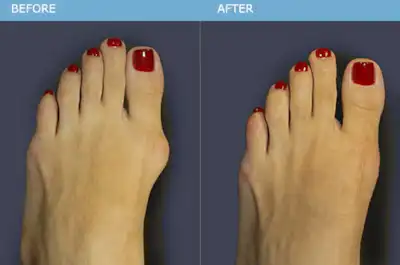
Minimally invasive bunion surgery—often referred to as a bunionectomy or bunion removal—is a modern, outpatient procedure designed to correct bunion deformities with significantly less trauma to the foot than traditional open surgery. By using specialized instruments through tiny incisions, a foot surgeon can realign the bones, reduce the bony bump, and restore normal foot function. This advanced technique offers numerous benefits, including less postoperative pain, minimal scarring, a lower risk of joint stiffness, and a faster recovery period compared to conventional methods. If conservative treatments like custom orthotics or shoe modifications have failed to provide lasting bunion pain relief, minimally invasive surgery may be the ideal solution to help you get back on your feet comfortably.
Not sure if you need surgery yet? Learn more about conservative bunion treatments before deciding on a procedure.
Below are frequently asked questions (FAQs) & answers about bunions in general and bunion surgery.
In many cases, conservative treatment is all that is needed. Routine podiatric examinations and X-rays can track the progression of the deformity and help prevent irreversible joint damage. Initial treatments often include shoe modifications, activity changes, bunion padding, custom orthotics, or injections.
As long as the pain does not interfere with your daily activities, your podiatrist can continue with these alternative methods. However, when a bunion begins to affect your mobility, it is time to consult an experienced foot surgeon about surgical bunion removal options.
Our Awesome Podiatry Services in Irvine, Orange County CA
Awesome Podiatry Clinic For You
Our podiatrist in Irvine, Dr. Sima Soltani, is specializing in operation less treatments. With more than 20 years of experience in treating patients with foot and ankle problems, we are the most reliable podiatry clinic in Irvine California.
Learn About Our Practice
Toenail Laser Treatment
10% off your toenail laser therapy. With the state of art Laser equipment we will make your nails look wonderful
Stem Cell Therapy For Pain
Stem-cell therapy is a method of using stem-cells to prevent and treat numerous diseases or conditions
Custom Orthotics By Podiatrist
Our comprehensive podiatric foot care system includes custom foot orthotics that provides a stronger pain relief
Stem Cell Therapy For Ankle
After treating ankle arthritis with stem cell therapy, you will experience improvements in pain caused by ankle arthritis
Stem Cell Therapy For Knee
Many studies show that stem cell therapy could extremely improve knee arthritis condition. Stem Cell for knees by podiatrist
Stem Cell Therapy For Neck
Research has shown that regenerative stem cell therapy with injections has effectively treated neck and back, and spine conditions
Stem Cell Therapy For Arthritis
Stem cell therapy is one of the most efficient methods to regenerate damaged or lost tissues and inflammation in arthritis
Why Our Podiatry Clinic in Irvine?
20+ Years Experience As Foot Doctor
You will be shocked to know that normally you should not have pain in your feetYou will be shocked to know that normally you should not have pain in your feet your feet and ankles are amazing! However, tend to underestimate its importance to our everyday life. The number of steps a person takes on a daily basis range from 10,000 to 15,000. It takes a real beating to your feet and ankle which can lead to the inevitable common foot and ankle injury. More than half of Americans seek help for their feet and ankles problems every year.
If you are having a foot problem, don't consider yourself alone as more than millions of the population seek help for their foot problems every year. If you need to find a foot doctor (podiatrist) and are out of the Irvine, Orange County area, consider making an appointment with our podiatrist in Irvine. Here are some foot problems we treat in our podiatry office
-
20+ Years Podiatry Experience
-
Best Technology
-
Patient Satisfaction
